
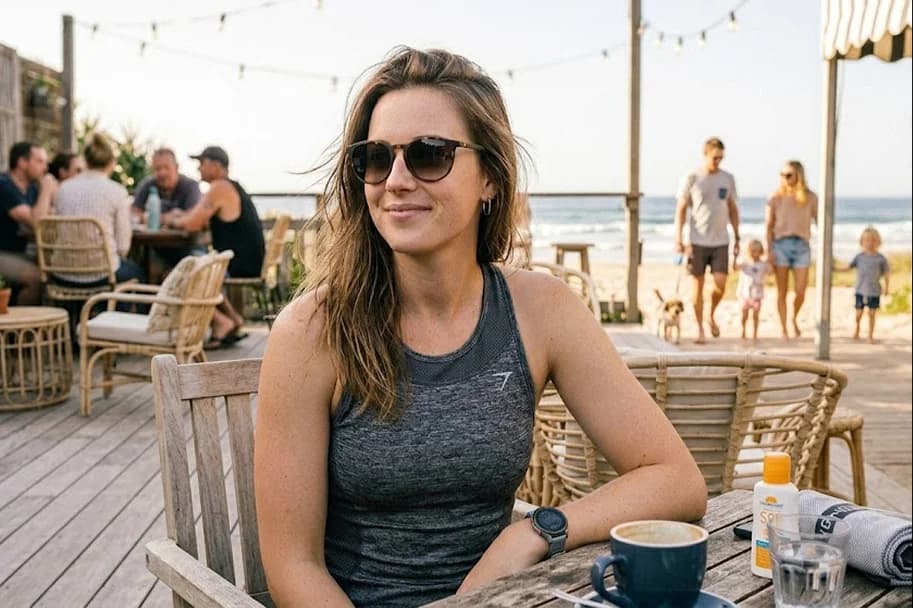
Leading Seaman · Royal Australian Navy · Maritime Logistics, Supply Chain · 6 years
PTSD and two consequential conditions accepted, $296,000 tax-free
Sarah had never lodged a formal DVA claim. She was terrified the process would mean reliving everything. We gathered her story once and handled everything from there.
$296,000
Tax-free total
50 pts
Impairment
~8 months
Consult to payment
Outcome summary
| PTSD | Accepted, primary condition |
| Anxiety disorder | Accepted, consequential condition |
| Alcohol use disorder | Accepted, consequential condition |
| Impairment points | 50 points |
| PI lump sum | $296,000 tax-free |
| White Card | Retained and expanded, all three conditions |
| DVA-funded treatment | Psychology, psychiatry, ongoing |
| DVA rehabilitation | Vocational support program referred |
| Total time to PI payment | ~8 months from first consultation |
The situation
Sarah served six years in the Royal Australian Navy, including a deployment to the Middle East region that she doesn't talk about much. She separated at 26 and moved to the Gold Coast, close enough to the water to feel like herself, far enough from everything else to try and start over.
She was accessing free counselling through Open Arms and had a Non-Liability Health Care White Card covering her mental health treatment. On paper she had some support. In practice she was two years out of the Navy, working whatever shifts she could pick up, and managing on her own in a way that was taking more out of her than anyone around her could see.
She'd never lodged a formal DVA claim. The thought of it scared her. Not the paperwork, but what the paperwork would require: sitting down and going through it all again, putting it in writing. She'd heard from other veterans that the process meant telling your story over and over to different people until DVA was satisfied.
A friend from her ship who had used us made the introduction. Sarah called us but almost didn't.
The challenge
Sarah had PTSD. She also had an anxiety disorder that had developed alongside it, and an alcohol use disorder that had taken hold in the years since discharge as a way of managing what the PTSD was doing to her sleep, her relationships, and her sense of control.
She was embarrassed about the alcohol use disorder. She was worried it would count against her, that DVA would use it as a reason to dismiss the rest of her claim, or that it would reflect badly on her in some way. She hadn't mentioned it to anyone outside of her treating psychologist.
What she didn't know was that an alcohol use disorder developed as a consequence of PTSD is itself a recognised consequential condition under MRCA. Claimable and linked to the primary condition. The same applied to her anxiety disorder. She wasn't hiding liabilities. She was sitting on entitlements.
The other barrier was the process itself. The fear that claiming meant retelling her story repeatedly to strangers was real and completely understandable. It was also, in our hands, avoidable.
What we did
We started by being direct with Sarah about how we work. She would tell us her story once. We would handle everything from there.
We coordinated a psychiatric assessment with a practitioner experienced in DVA claims and the MRCA SoP framework, someone who understood how to structure a report around the specific causative factors DVA needed to see, and who approached the assessment with the clinical care Sarah's situation warranted.
We identified the anxiety disorder and alcohol use disorder as consequential conditions arising from the PTSD and claimed all three simultaneously in a single coordinated submission. We briefed the psychiatrist on all three conditions so the assessment addressed each one in the same sitting.
We prepared the liability claims, lodged them to decision-ready standard, and managed all subsequent DVA correspondence. When DVA had questions, they came to us, not Sarah.
Once liability was accepted across all three conditions, we prepared the PI claim. We worked with Sarah's treating team to complete the lifestyle rating questionnaire, ensuring the full functional impact of her conditions on her sleep, her relationships, her capacity to work, and her daily functioning was properly documented and reflected in the assessment.
The outcome
All three conditions accepted. 50 impairment points. $296,000 tax-free PI lump sum. White Card retained and expanded to cover all three conditions. DVA-funded psychology and psychiatry ongoing. Referred into a DVA vocational rehabilitation program. Eight months from first consultation to PI payment.
The lump sum allowed Sarah to reduce her work hours and prioritise her treatment and recovery without financial pressure forcing her hand. For the first time since she left the Navy, she had room to actually focus on getting better.
- PTSD accepted as primary condition
- Anxiety disorder accepted as consequential condition
- Alcohol use disorder accepted as consequential condition
- 50 impairment points, $296,000 tax-free PI lump sum
- White Card retained and expanded for all three conditions
- DVA-funded psychology and psychiatry ongoing
- Referred to DVA vocational rehabilitation program
- ~8 months from first consultation to PI payment
Get expert help
Not sure where you stand? Send us a message and we will walk you through your options.
Get in touchAll case studies on this page are fictional composites created for illustrative purposes. They are based on realistic DVA and CSC entitlement data but do not represent any specific individual. Outcomes vary and depend on the specific facts of each case. Clear Path Veterans Pty Ltd (ABN 78 690 447 879) is not a law firm and our team are not registered legal practitioners. For personalised advice, book a free consultation.
Ready to take the first step?
Book a free discovery call. No cost, no obligation. Just a straight conversation about what you may be entitled to.
Book a discovery call