
Musculoskeletal
DVA Knee Injury Payout & Compensation Claims
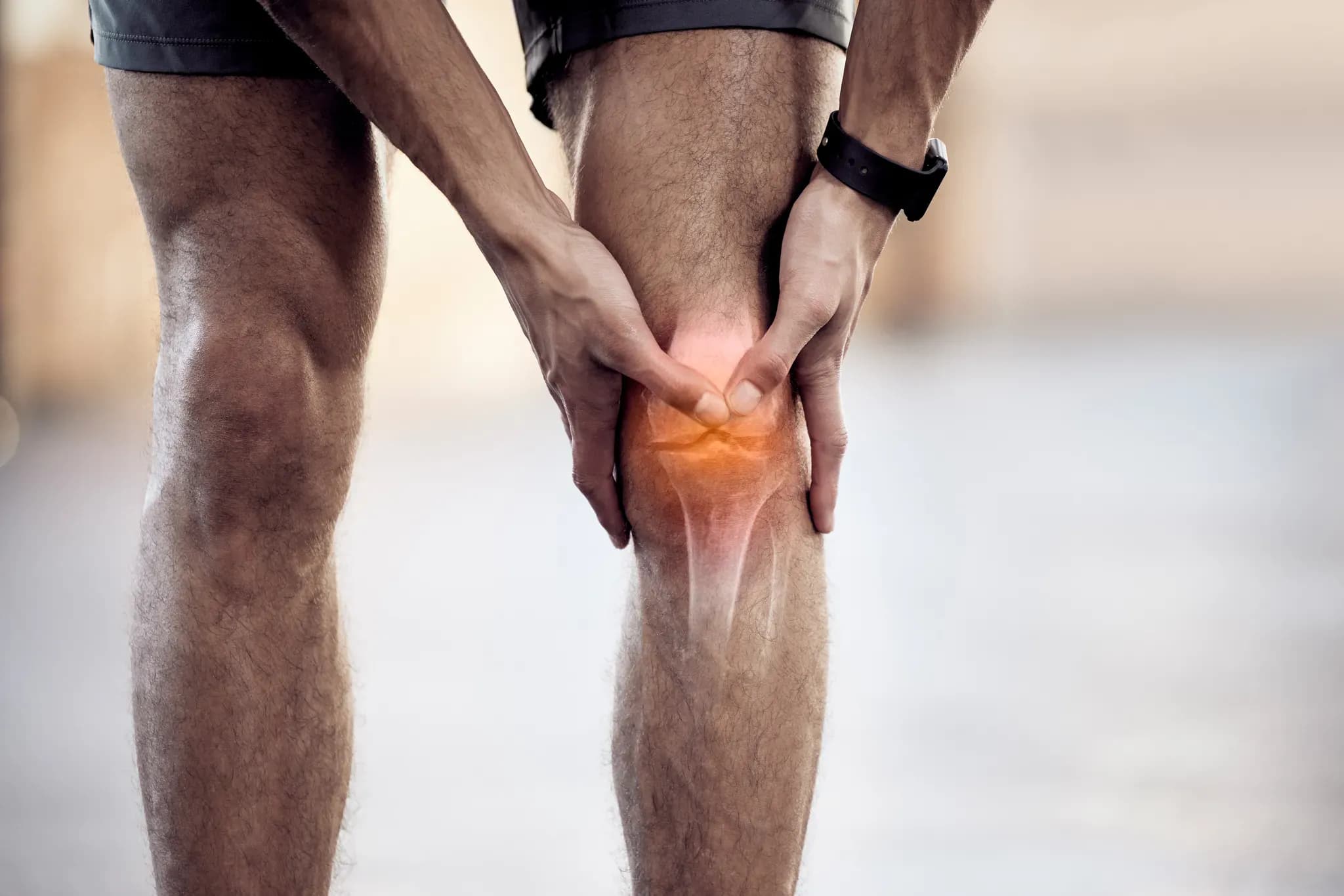
Knee injuries are among the most common musculoskeletal conditions in ADF veterans, caused by the demands of load carriage, running, parachuting, and physically demanding training. The DVA SoP covers a range of knee pathologies, from internal derangement of the knee (IDK) to meniscal tears, ligament injuries, and patellofemoral disorders.
Each distinct knee pathology can be claimed separately. A veteran with ACL reconstruction history, meniscal tears, and patellofemoral syndrome following years of ADF service may have three or more separate claimable knee conditions.
Bilateral knee conditions (both knees affected) are assessed separately for each side. A veteran with moderate OA in both knees scores points for each independently, and the combined total adds meaningfully to the overall CIS. Always claim both knees if both are affected.
Knee conditions also commonly develop alongside hip osteoarthritis, lumbar spondylosis, and ankle conditions because altered gait from a bad knee puts stress on other joints. Every related condition in the kinetic chain should be identified and claimed.
Reviewed by Luke Martin · Co-Founder, Clear Path Veterans · Updated September 2026
Why Knee Injuries is common in the ADF
Repeated running on hard surfaces, load carriage, parachuting, physical contact training, and occupational accidents all place significant stress on the knee joint. ADF training culture has historically discouraged reporting minor injuries, meaning many veterans accumulated significant knee pathology that was never formally documented during service.
Infantry, combat engineers, parachute-qualified personnel, and anyone who spent years carrying heavy loads on patrol, exercise, or training are at highest risk. But knee conditions aren't limited to ground roles — aircraft maintenance personnel who kneel in confined spaces, logistics personnel who repeatedly lift and carry, and vehicle crew who jump from vehicle cabins all have exposure.
Medical access
Provisional Access to Medical Treatment (PAMT)
Knee Injuries is on the PAMT list. This means you can access funded medical treatment while your DVA claim is being assessed, you do not need to wait for a liability decision to start treatment.
Physiotherapy and knee rehabilitation programs
Orthopaedic specialist consultations
Imaging (MRI) as clinically indicated
Hydrotherapy
Deadline: PAMT applications for Knee Injuries must be lodged by 30 June 2026. After this date, PAMT will no longer be available as the VETS Act takes effect. Do not wait.
Statement of Principles, in plain English
DVA assesses your claim against a Statement of Principles (SoP). Here are the key factors that most commonly apply to Knee Injuries claims, translated from the legal language.
Trauma to the knee during service activities
Physical trauma to the knee joint, not necessarily formally recorded at the time
Cumulative physical loading of the knee: running, load carriage
At least 1,000 hours of qualifying physical activity within a 10-year period for osteoarthritic change
Load carriage causing chondromalacia patella
Running/jogging at least 1,600 km within a 12-month period, or carrying loads of at least 25 kg for at least 100 hours within a 12-month period
Parachuting with compressive loading on the knee joint
At least 20 descents carrying qualifying equipment weights
BMI of 25 or above at or around the time of clinical onset
Having a body mass index of 25+ for knee osteoarthritis specifically
Conditions that commonly develop alongside
Veterans with Knee Injuries often develop related conditions that may also be claimable. These are worth assessing at the same time as your primary claim.
What to expect for impairment points
Knee conditions are assessed under GARP M Chapter 3. The assessment measures range of motion (flexion and extension using a goniometer), stability (ligament laxity testing), meniscal integrity, crepitus, swelling, muscle wasting, and presence of surgical hardware. Joint replacements attract a specific impairment rating regardless of post-surgical function.
Approximate impairment for a single knee: 5 points for mild limitation, 10 points for moderate loss of range with pain on stairs and prolonged walking, 15–20 points for significant functional loss requiring a brace or walking aid, 25–30+ points for severe impairment including total knee replacement.
For bilateral conditions, each knee scores independently and the two ratings are combined using the Combined Values Chart. A veteran with 10 points per knee gets a combined score of approximately 19 points. Add lumbar spondylosis, thoracic spondylosis, and tinnitus, and the total CIS can reach the 40s or 50s.
Use the DVA PI Points CalculatorWhat a strong Knee Injuries claim looks like
MRI of the knee (or both knees if bilateral) confirming specific pathologies — meniscal tears, ligament damage, cartilage loss, bone marrow oedema
Orthopaedic specialist report assessing each identified condition with range of motion measurements
Service records and statutory declaration establishing the physical demands and any acute injuries during service
Surgical records if knee surgery has been performed (arthroscopy reports, post-operative notes)
Updated imaging if your last MRI was more than five years ago — degenerative conditions progress over time and more severe findings support higher impairment ratings
GP records showing the chronological history of knee symptoms and treatment since discharge
DVA currently takes 3–6 months to decide most initial liability claims. Complex or multi-condition claims can take longer. Lodging a complete, decision-ready claim upfront reduces back-and-forth.
Processing times guideCommon questions about Knee Injuries claims
Ready to claim Knee Injuries?
Book a free consultation and we'll walk you through whether your condition meets the SoP factors, what evidence you need, and how to build a decision-ready claim.
Book a free consultationRelated conditions
The information on this page is general in nature and does not constitute legal, medical, or financial advice. Clear Path Veterans Pty Ltd (ABN 78 690 447 879) is not a law firm and our team are not registered legal practitioners. For medical concerns, consult a qualified health professional. For legal advice, consult a lawyer experienced in military compensation law. Individual circumstances vary and outcomes depend on the specific facts of each case.